
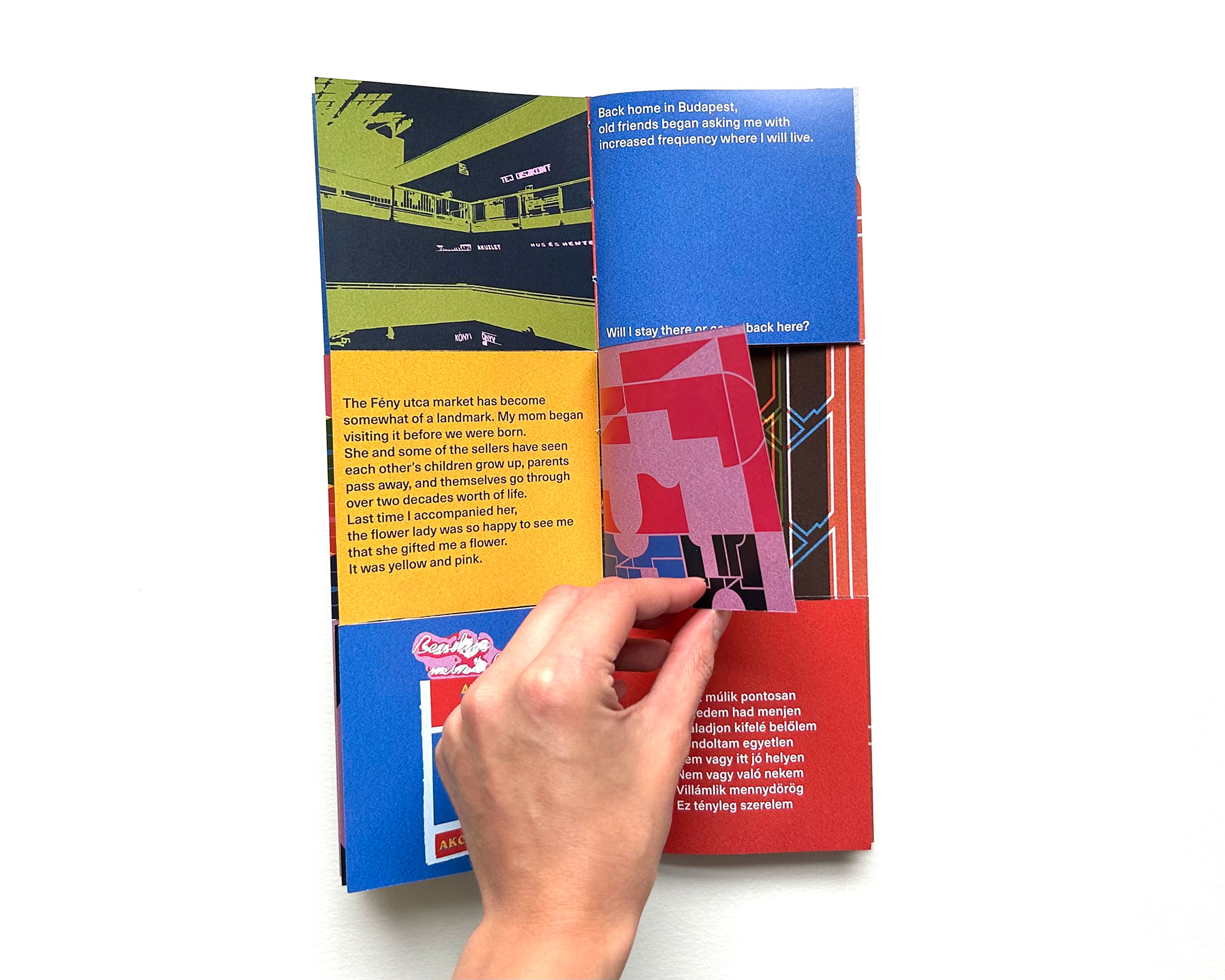
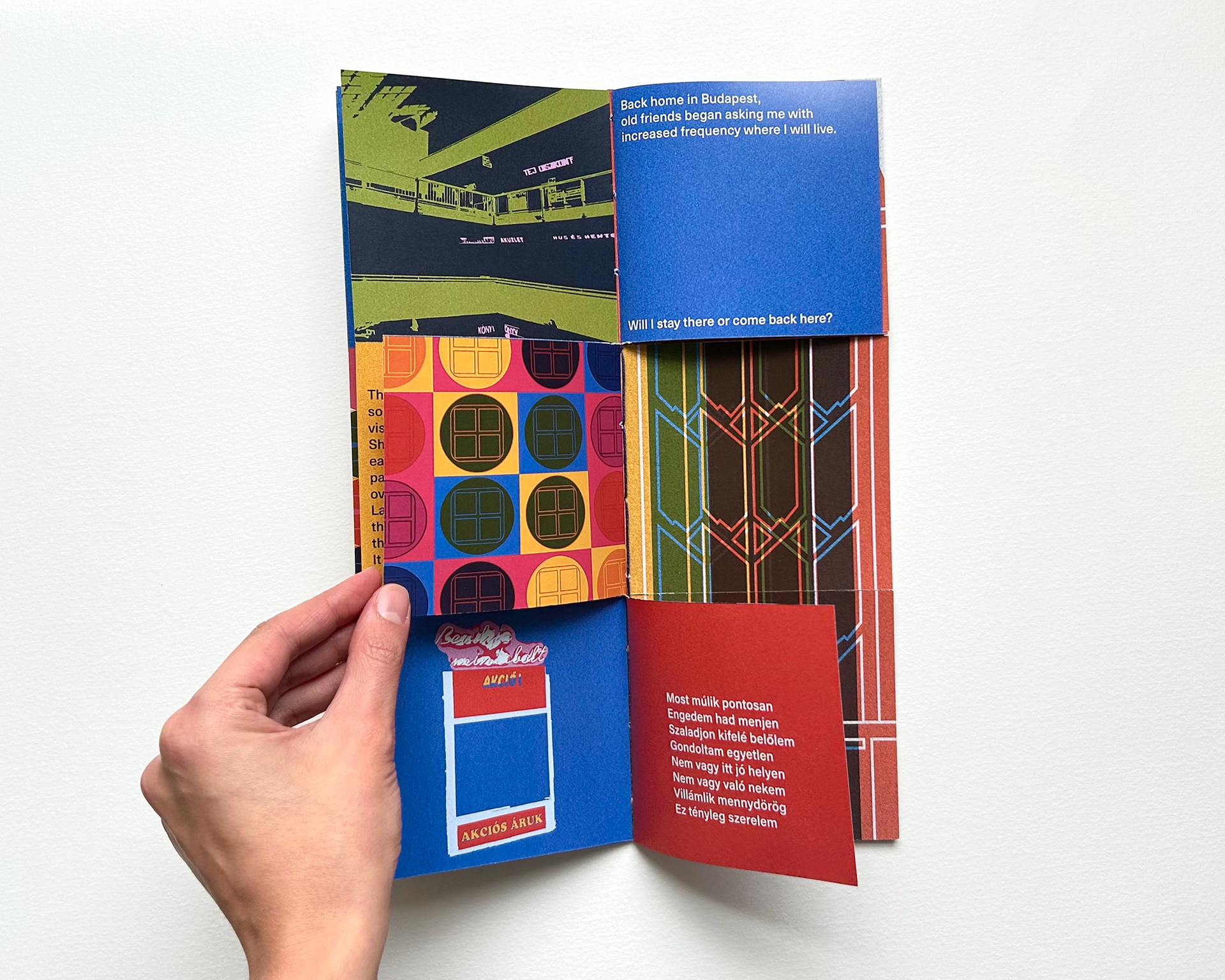
I currently have two artist's books created during my Masters at the Cambridge School of Art in 2023. Both contemplate the concept of home, nationality and place attachment, as well as how the physical form of the book can contribute to meaning. Details about process can be found below.
Ordering
Please keep in mind that these books are made to order. They are assembled and bound by hand, and therefore take slightly longer to dispatch. For approximate times and to order please reach out via the contact form at the bottom of the page. Prices and shipping details can also be found there.
For permission to use any material in personal, commercial or academic contexts please reach out below.
TIME TO GO HOME
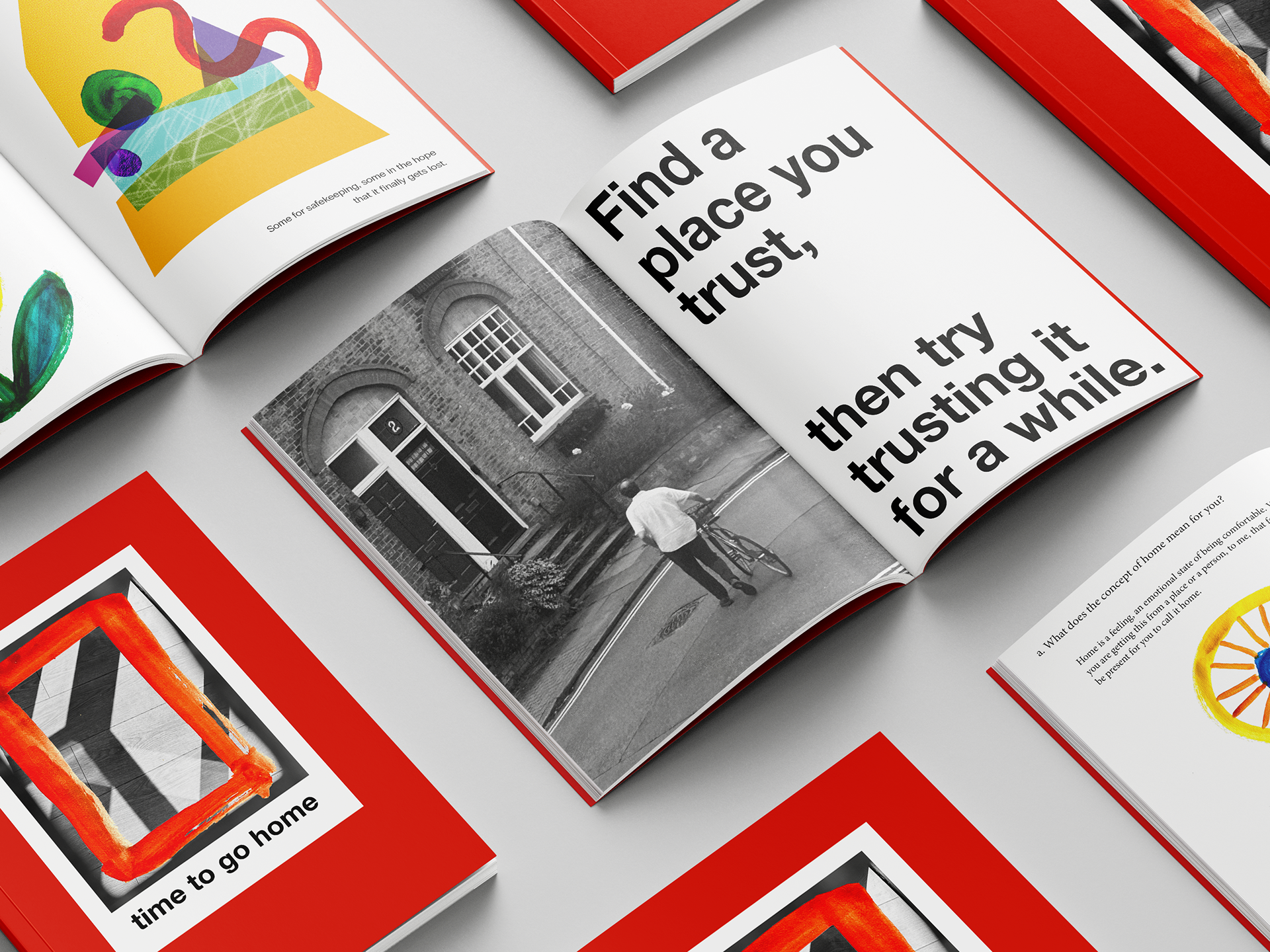
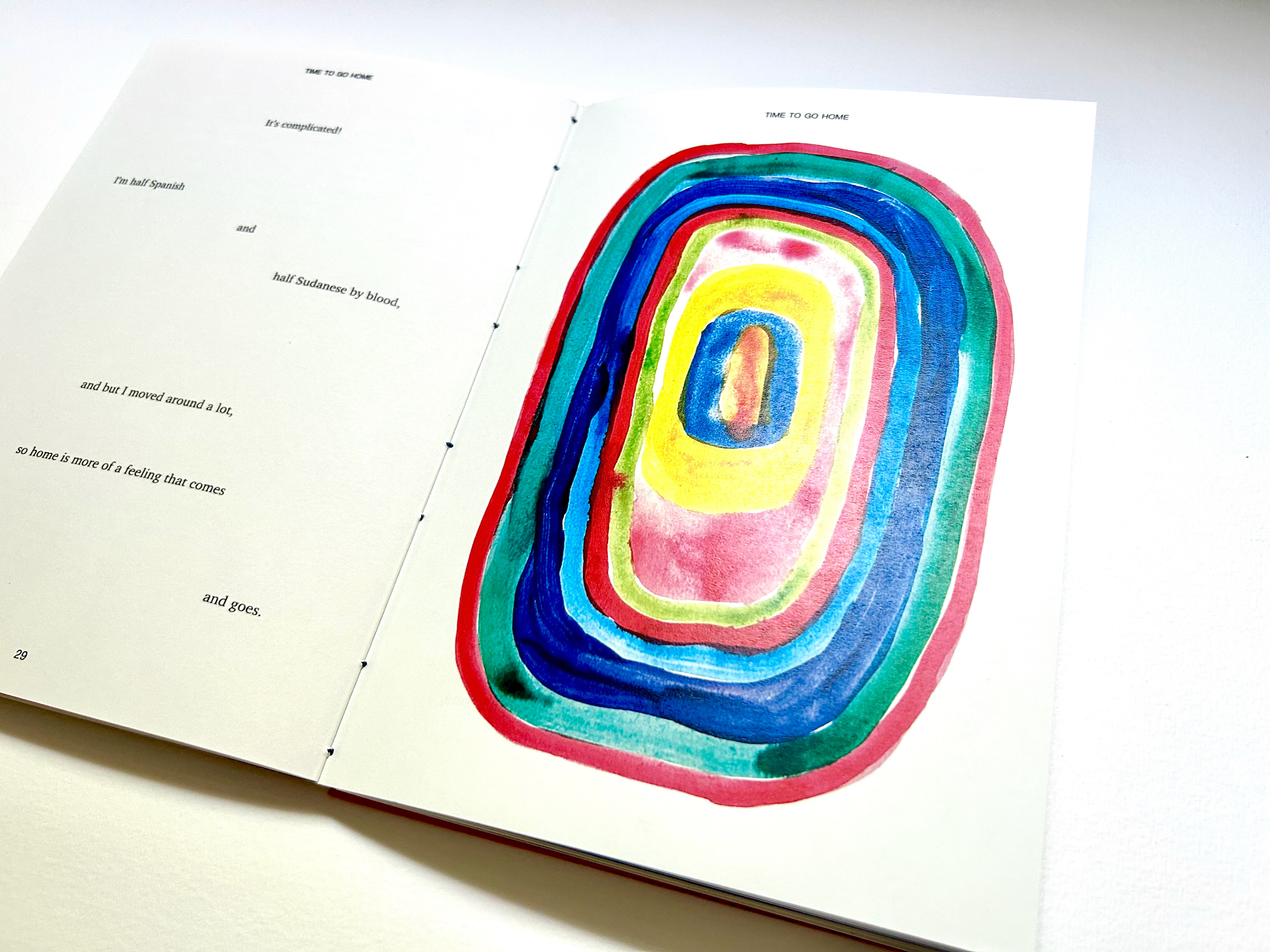
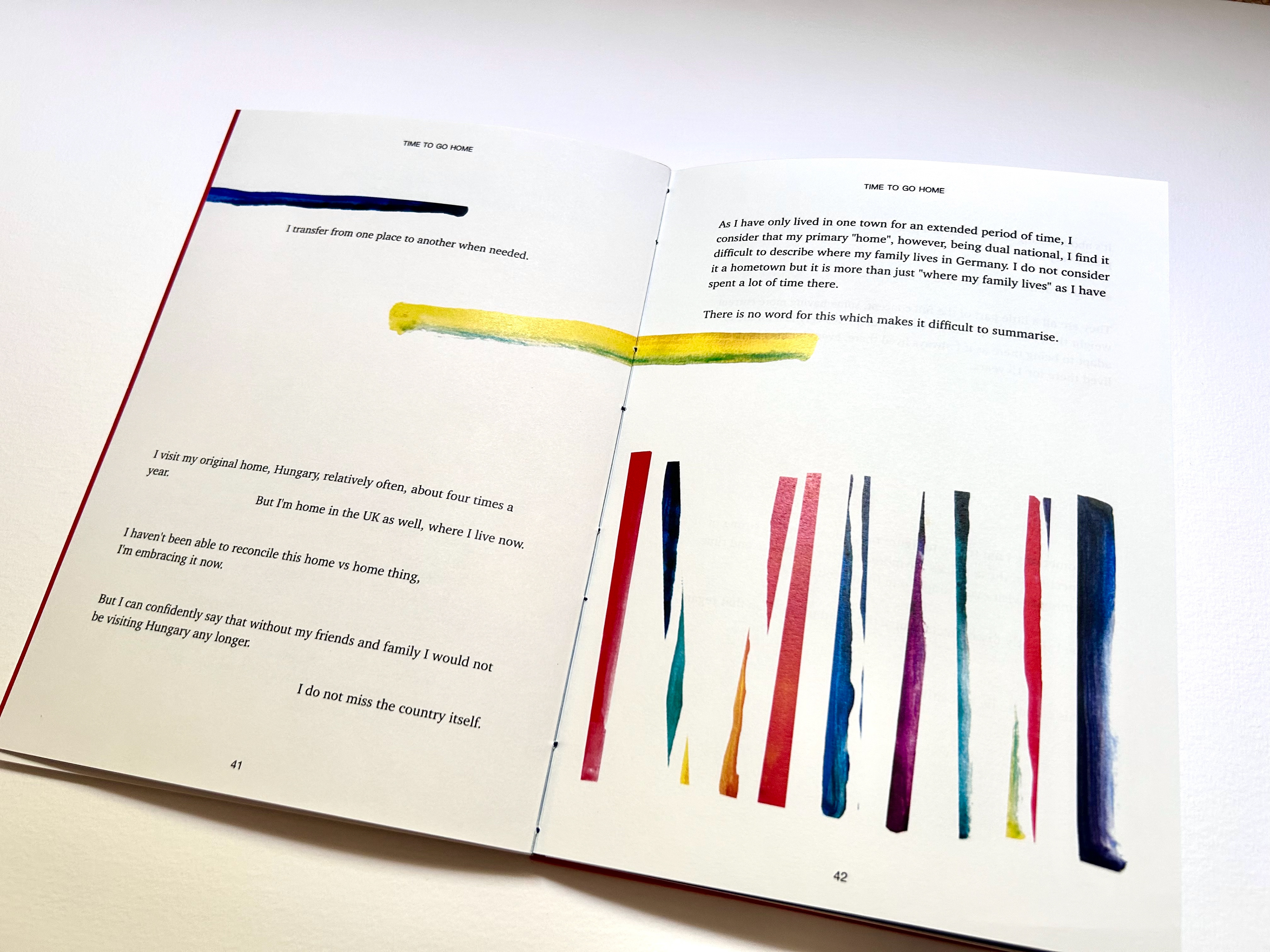
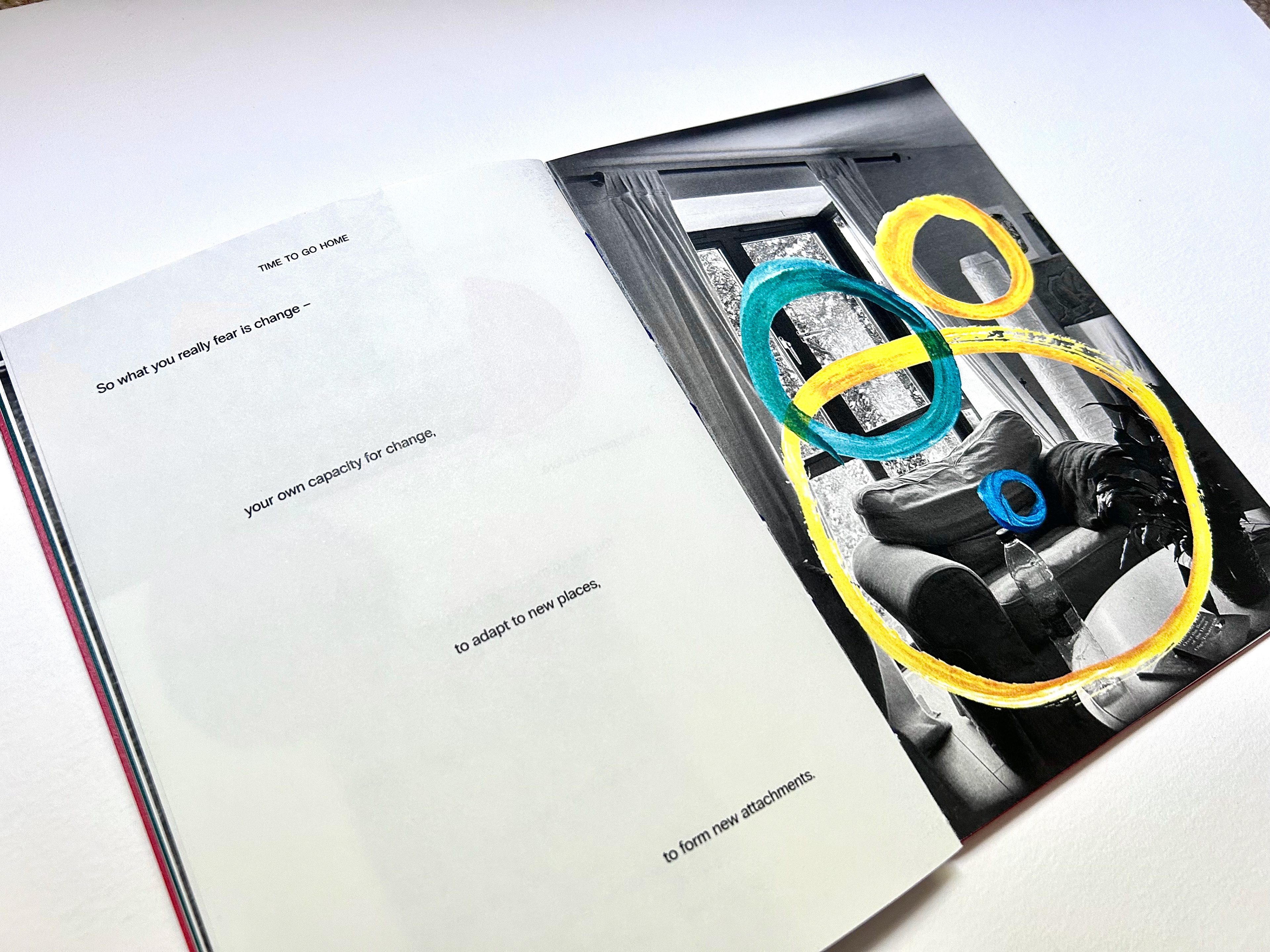
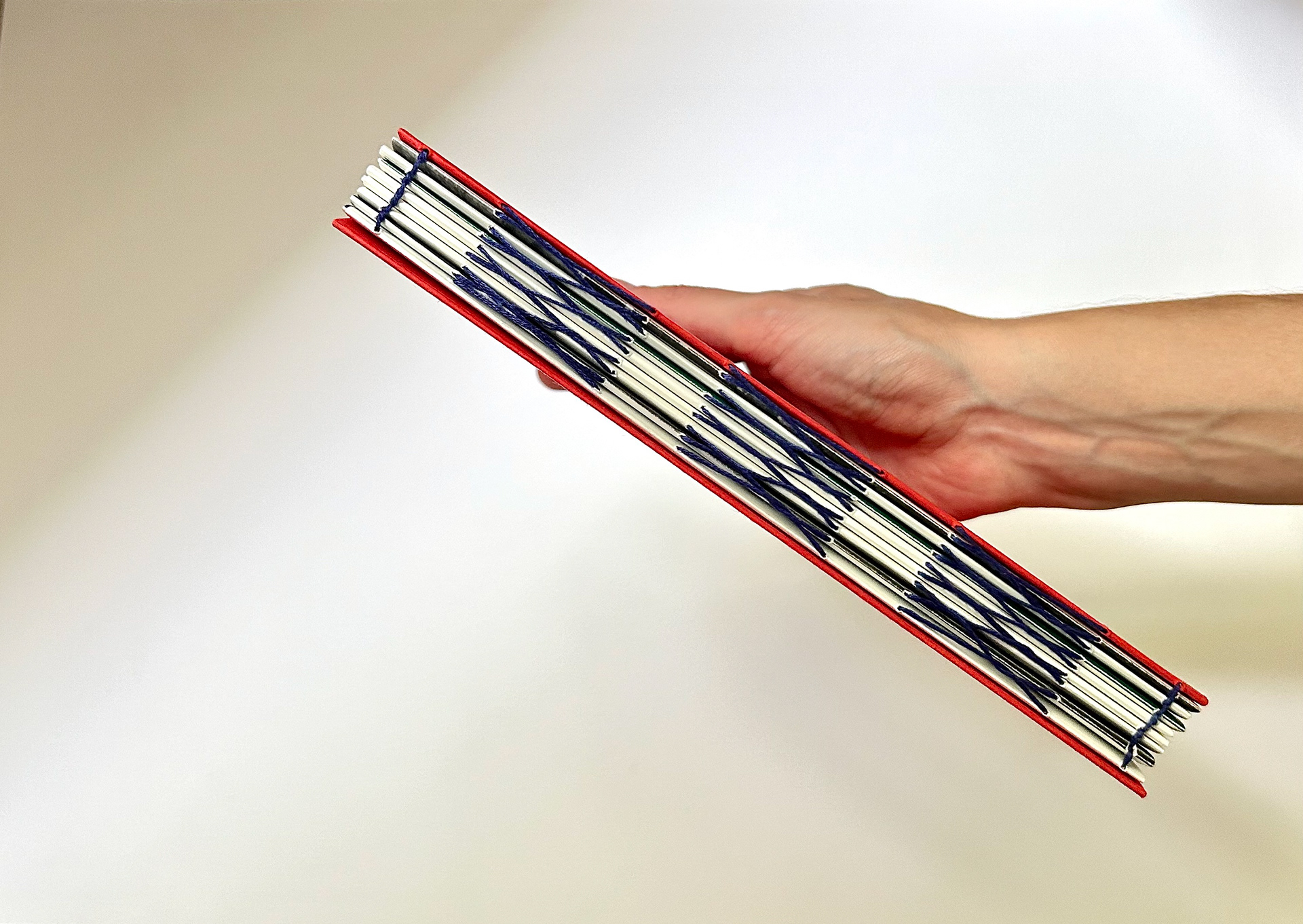
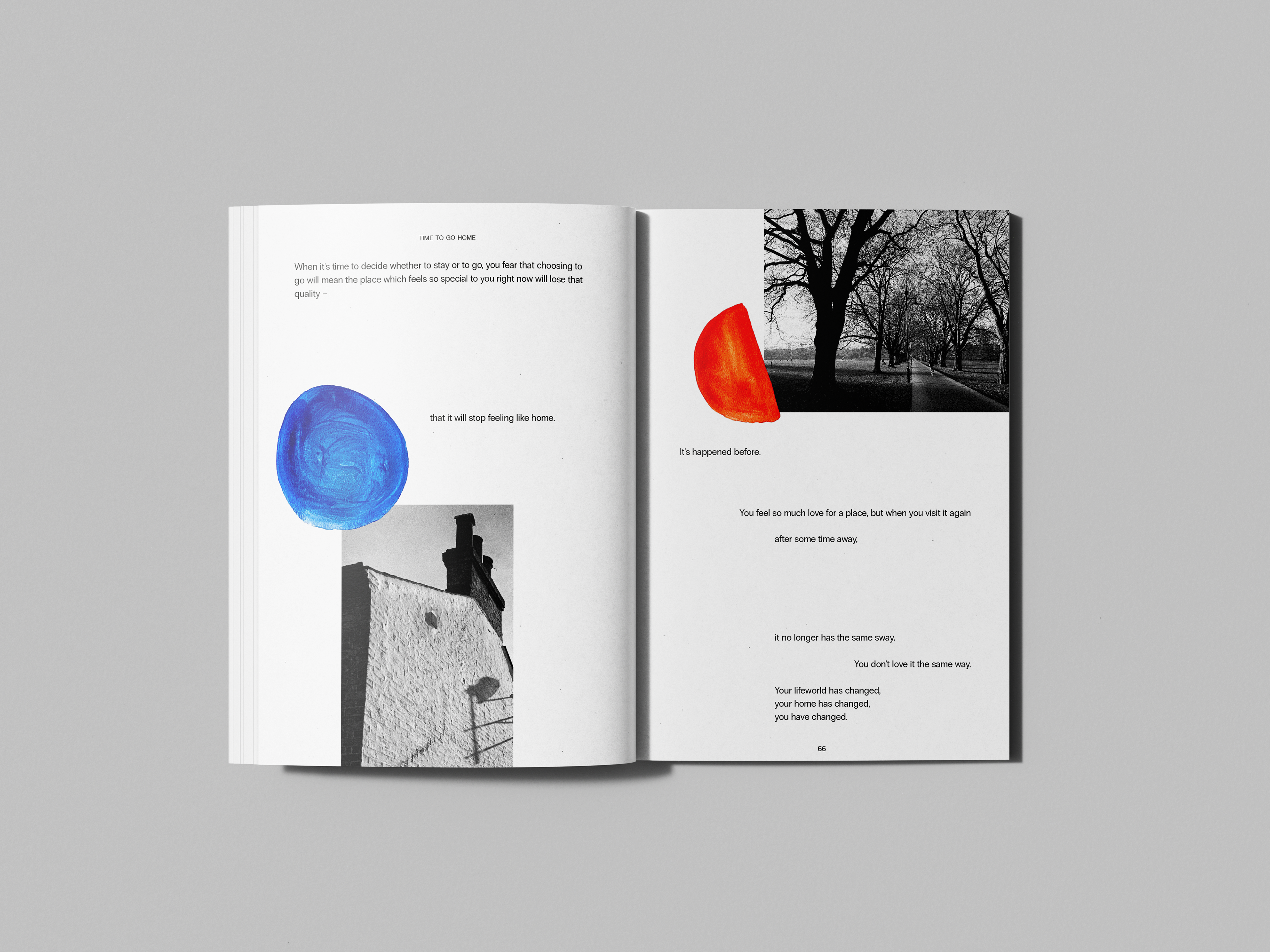
This is a reflection I wrote upon completing 'Time To Go Home', which provides an insight into the book's process:
Intentions
At the time of developing a project idea my initial intentions were personal, as the questions around home, belonging and attachment felt very pressing. After spending a number of weeks researching AI, I decided to refocus because I needed to work through these questions in a visual, creative way. After getting my own thoughts out onto paper and beginning to develop a visual system, my intentions shifted slightly and it grew from a personal need to encompass an interest in the thoughts of other young adults, as well as academic research. My intention became solving the puzzle of visually communicating deeply personal reflections, both my own and others, without it turning into a soapy collection of diary entries. I wanted my work to be outward looking and present a way for visual communication methods to unite the personal, social and theoretical.
Methodology
In order to communicate my above mentioned intentions as best I could, I developed three narrative strands – a personal, social and theoretical. For these to be coherent I formed a visual system which also had three distinct strands but at the same time would act to unite the pieces to form a whole. I tested a variety of image making methods, such as drawing from observation and photographs; image tracing in Illustrator; mixing watercolour with digital assets; as well as photography; digital collage; and even animation. I initially tested figurative routes but realised that a more abstract language was better suited as it left enough room for the audience's imagination and also allowed for more motif building and overall consistency throughout the book. In addition to acting as illustrator and designer, I also took on the role of facilitator and editor through the development of a series of questions, which were distributed to a variety of people, and the subsequent curation of their answers.
Research
My secondary research centred around place attachment theory, and concepts of home and belonging. These topics are of interest to geographers, philosophers, as well as sociologists and psychologists, thus my sources were usually framed by at least one of these fields. I found this extremely useful as it provided a variety of perspectives and leads. My primary research consisted of informal conversations with friends and the online questionnaire, which was systematically developed, processed and edited for inclusion in my book. I think both strands of research happened at the right time, as the secondary research provided me with enough foundational knowledge to begin visual work, while the slightly later primary research allowed me to expand the scope of my project and move forward at a point when I felt stuck. However, I chose the online questionnaire as my method in part due to the lack of time for other forms of interaction. I recognise the value of in-person, in-depth interviews and hope to incorporate it as a method in future projects.
Investigation
As mentioned under Methodology, I investigated a number of visual routes before arriving at the final structure. I investigated the effects of drawing, but found that my primarily line based images didn't work well with stronger graphic elements. I also investigated collage with photography and mark making, mostly painting, which after some unsatisfying early versions, I decided to develop further for the final outcome. I also tested methods which were successful in previous projects, such as image tracing in Illustrator, and monoprinting with digital colouring, but did not work for this project. My investigations were systematic in so far as creating a number of images and variations of each, as well as mocking them up alongside text to test their suitability, but my decisions to try one method over another were mostly intuitive.
As text is an equally important component of my outcome, I also invested a lot of time into testing different typefaces and layouts to achieve the pacing and harmony that I wanted. My visual work always turns out to be different from my initial imaginings, but I consider that a good thing, as my early ideas are usually based on impressions of other people's works. Though the process is often frustrating, in retrospect I am glad to interrogate so many ways of making until I develop the right one, rather than working in a predetermined style.
Decisions
There are two important decisions that I've made – the decision to let go of my AI idea and focus on "home"; and to expand beyond my own writing to include other people's experiences. The former was very scary to make and thus took me a long time to fully decide, but the lack of motivation and interest I had towards my work were clear indicators that I wasn't working on the right project. The latter was made initially out of interest. I wanted to know if and how people thought of my themes, and I realised that it makes the outcome much richer. If I decided to switch ideas earlier, I probably would have had the chance for in-person interviews, instead of or alongside the online questionnaire. Perhaps the lesson is to have the courage to change if and when needed.
Insights
Other lessons I've learnt are that I really enjoy developing questions that probe people to open up, and that almost everyone struggles, or at least contemplates. the meaning of home. This might seem like a no-brainer, but in the past my practice was often quite inward-looking — it's nice to expand. I've realised this in a previous module, but this project reinforced it – I am fascinated by place, how people relate to it and how they talk in and about it. Finally, my wonderful year in Cambridge has made me incredibly interested in how illustration and graphic design can be brought together to communicate ideas and I can't wait to explore it further.
ITT IS OTT IS
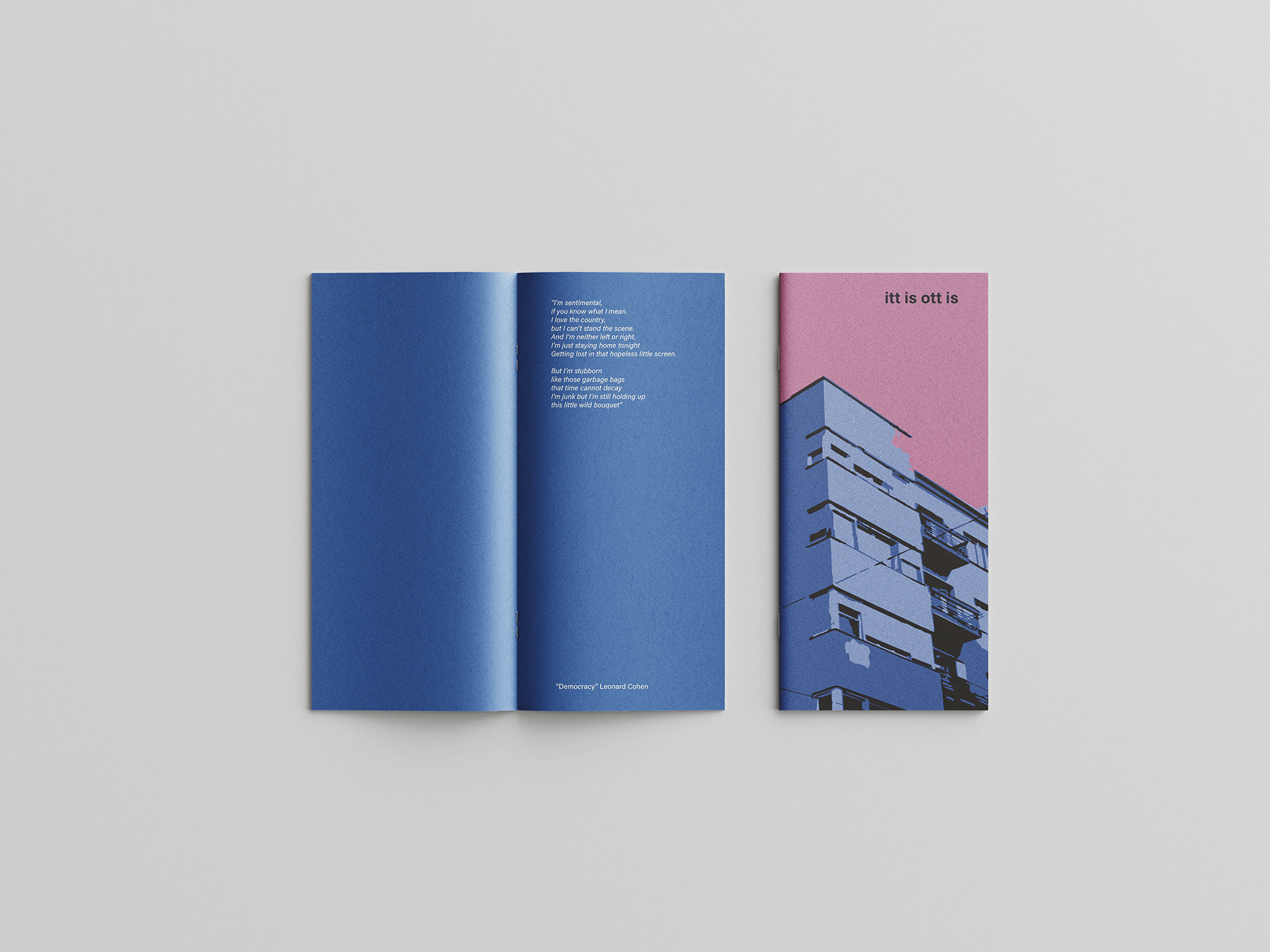
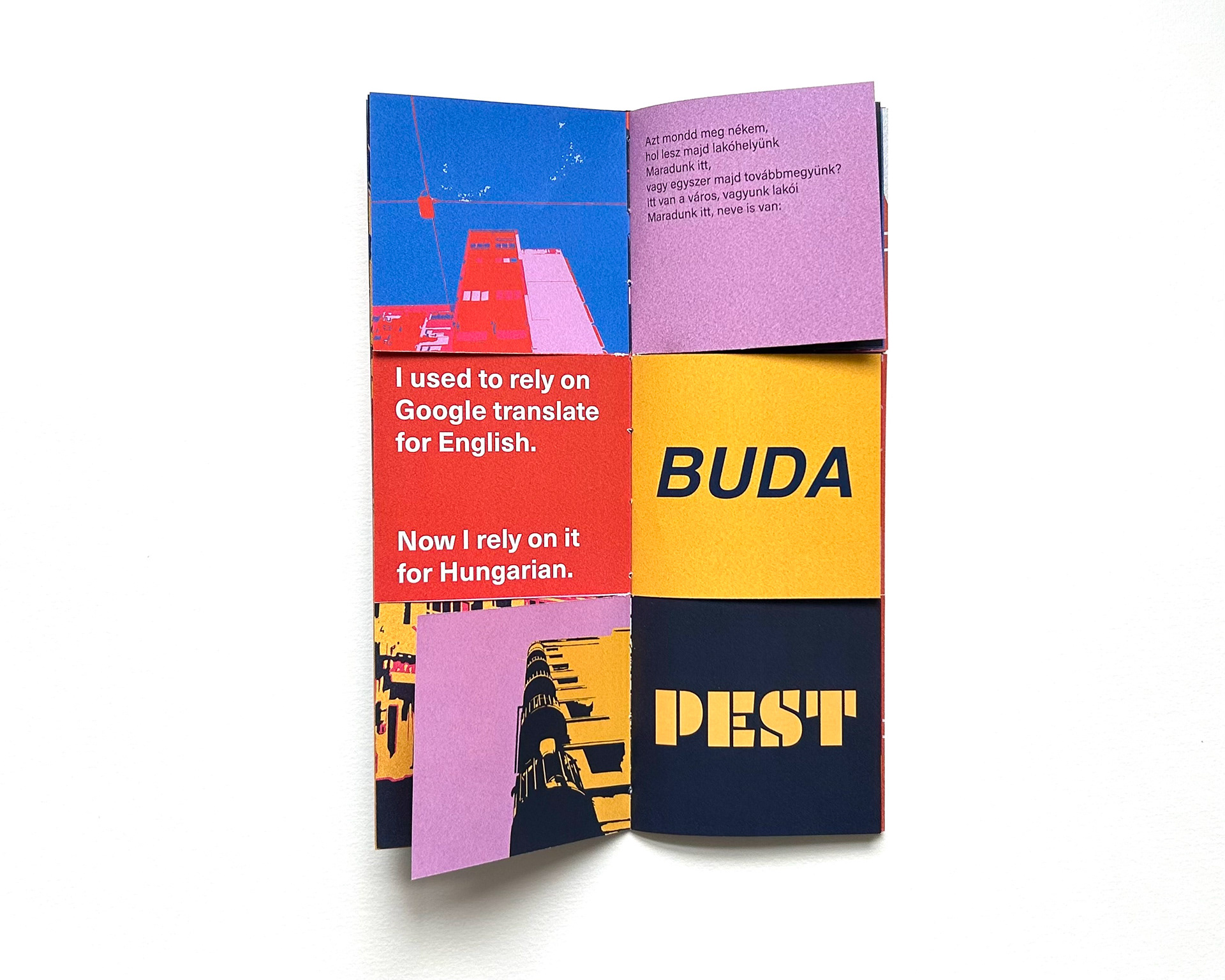
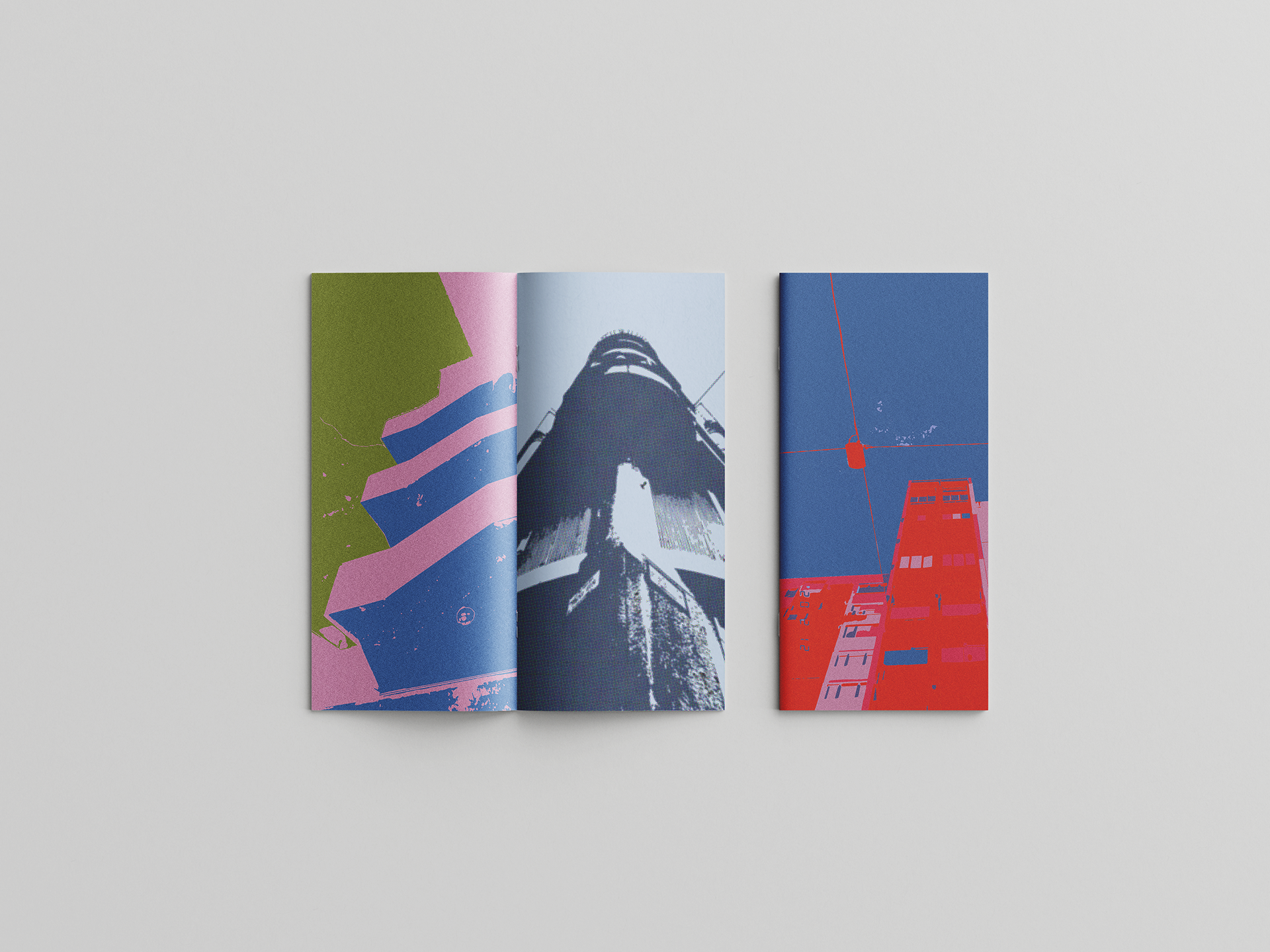
This project was the precursor to 'Time To Go Home' shown above.
Brief: "Develop and realise a ‘book’ in which the relationships between text, words, imagery, authorship and the artist’s voice are explored."
A detailed process can be viewed in this logbook.
Prices
'Time To Go Home' — £22
'Itt Is Ott Is' — £16
Shipping costs to UK and EU are included in the above prices. Costs to other countries will be determined case by case.
Thank you for your interest! I will contact you shortly!